Showing posts with label social activist. Show all posts

Saturday, April 14, 2012

CHANGE TALK with SHAFIQ.R.KHAN - FOUNDER, EMPOWER PEOPLE


By: Alam Bains 

Human trafficking is modern slavery. Former Indian Home Secretary, Madhukar Gupta, believed that as many as 100 million people in India are involved in trafficking, and world expert Professor Kevin Bales acknowledges that India "may have more slaves than all the other countries of the world put together".
 
In order to understand the phenomena of Bride trafficking, we interviewed Shafiq. R. Khan, the Founder of EMPOWER PEOPLE, an NGO working to protect female victims of violence and mitigate post-violence trauma. EMPOWER PEOPLE is one of the pioneer organizations focusing on the issue of human trafficking for the purpose of forced marriage and female foeticide in North India. Shafiq sheds light on the social evil of Bride Trafficking.

What is Bride trafficking?

When girls are deceived in the name of marriage and then sold to others, such girls come under the definition of bride trafficking. The whole thing gives an impression of a normal marriage; but such girls re-trafficked and sold in the name of marriage again and again. This type of trafficking is called Bride Trafficking. It is a new word to define an inhuman custom which is being practiced for centuries. Bride buying is an old custom of world, especially India where a man has the privilege of buying a girl in the name of marriage. China and Korea are well aware of this phenomenon.

In which parts of the country is it more prevalent and why?

We are (India) source, transit and destination for bride trafficking. Some girls are being trafficked to other countries as well like Arab countries, Canada, Australia, USA and UK from Andhra Pradesh, Haryana-Punjab and Rajasthan. Ironically Haryana-Punjab and Rajasthan are major destinations for Girls who are being trafficked from eastern and southern states. 90 percent cases of bride trafficking are domestic while 10% are international.

According to our analysis extending over a period of six years, it is found that highest percentage (23%) of bride trafficking take place from West Bengal. Assam is the next state from where 17% of girls have been lured into the trap. Undivided Bihar is next to Assam from where 13% of girls are trafficked.

Trafficking is now an organized crime and traffickers are professional criminals who are working for money. Poverty and other justification behind trafficking is nothing but a ‘myth’ created by those who want to keep their eyes closed from such an inhuman social crime.

What is the position of Indian legal system on the phenomena? Can an affected woman seek justice and if so, under which laws?

Unfortunately, there are no meaningful laws to tackle this; ITPA (Immoral Trafficking Prevention Act) is a special law for prostitution, not for all forms of trafficking. It is confused and self-contradictory too. Bonded labor act 1976 and Juvenile Justice Act can’t tackle this type of case. Indian Penal Code section 366 is an only way to tackle this, but it has no provision for rehabilitation or reintegration of victim girls.

Only two NGOs are working on the issue one is EMPOWER PEOPLE and the other is Shakti-vahini.  But Shakti-vahini is working on some other issues as well, since bride trafficking is not an issue which could raise funds and, of course, no one can sustain without funds.

Why is there such less awareness about bride trafficking in India?

Since victims are girls and they are from pitiable social backgrounds. Not only bride trafficking, but other issues related to these girls like ‘genital-singe’ and ‘witch killings’ are also ignored by media and elite civil society.

I would like to add one more thing that our NGOs  are fund oriented and they are not working for any specific issue that is why most of NGOs are working on those issue which can easily funded by any foreign agencies or any social groups.

Please tell us a little bit about your organization EMPOWER PEOPLE and why did you decide to take up the cause of bride trafficking?

EMPOWER PEOPLE was born in 2006 with an aim to work for victims of bride trafficking. When I was in March against Female Foeticide in Haryana, I met a trafficked woman and decided to work on this issue. Now, Empower People is working as an umbrella organization for 20 CBOs across the country.    

How does your organization deal with the problem of bride trafficking and what are the techniques and methods you follow during rescue and rehabilitation?

We are working in destination and source area for prevention, rescue and then rehabilitation. We believe that, if society is responsible for any problem then society, itself, can resolve the problem. Our belief-system reflects in our character, extended society is our funder, worker and volunteer. Most of rescue done by our organization was conducted by public participation and which can be termed mass rescue operation. Even we believe in, and successfully doing community based rehabilitation for those victims.

Please tell us about your current projects, especially the “WALK AGAINST BRIDE TRAFFICKING”.

Now we are working on sustainable rehabilitation and skill development of trafficked girls. Rescue and other crisis intervention centers are smoothly functioning in Haryana and Punjab where we are working on trafficking and honor based crimes.

Walk against bride trafficking is a programme to create a people’s network against bride trafficking and violence against women from source area to destination area of trafficking. It is not simply an awareness programme but it is an innovative fund raising idea and an opportunity to sensitize and engage male members of the society. Recently, we have completed first phase of the “March against bride trafficking” where we covered 4500 Km from Assam to West Bengal. During this march, we have seen some unforgettable moments. It was really unbelievable, when I was speaking on prostitution, sex work, rape and trafficking in mosques and other religious places, the religious leaders also came forward. They actively participated in the march. Some vaidik pathshala and Arya Samaj also took keen interest in the issue.  We will start a campaign with religious leaders as soon as possible.   

What is the documentary “DRAUPADI’S DESCENDANTS” about and what is the message being sent out through it?

Draupadi’s Desendents was funded by PSBT and directed by Oindrilla hazra. It was an attempt to cover all aspects of bride trafficking. It is first film where we can find such ethnic-track of bride buying and trafficking. It also covered Honor based crimes. The Haryana police are using this documentary as IEC material in police training and police gender sensitization workshops.

What changes would you like to see in India in the context of atrocities against women?

Our society (Indian) is hell for women, not only female feticide, trafficking or honor crime but rape, pornography, bride burning, witch-killing; every crime is being justified in a way or the other.  Hunger, poverty and other universal problems are also associated with women. So we have to work on everything but, at least, crimes should not be justified by any absurd logic. 

What are the future plans for EMPOWER PEOPLE?

We are planning to launch an embroidery house in August 2012, where survivors of Bride trafficking will be helped in their sustainable rehabilitation. Now, we are focusing on this project. Approximately 25 survivors of BT are being trained who will take the charge of Empower people.  

Eradicate Bride Trafficking, Join EMPOWER PEOPLE
For more Social stimulating Change Talks, Keep Reading N2MN

Monday, January 2, 2012

Volunteers for the Blind Foundation (VBF)


by Kimberley Fernandes
 
Volunteers for the Blind Foundation (VBF), a Delhi based organization functioning nationally for the Rehabilitation of the Blind was founded in the year 2000. VBF works with NGO’s & Visually Challenged individuals, while networking with the latter offering support and assistance on a national basis. 

Their vision is to improve the quality of life for the Visually-Challenged with a strong mission to assist Blind persons & organizations supporting them, to promote an understanding of their needs & to enable the availability of better quality of services nationally & internationally.

Their activities vary between Projects & Programmes like Sports, Placements, Ablympics, General Awareness and Networking. The Studies and Training involved are Methodologies in Technology, Volunteer Orientation, Technical Guidance, among many others. The services provided by VBF are for both - volunteers and NGO's.

More on VBF  @Click Here
More Such News @Click Here

Friday, December 30, 2011

Rita Banerji : The 50 Million Missing


by Alam Bains

Rita Banerji is a renowned Indian author, photographer and a gender activist who founded “The 50 Million Missing”, an online, global campaign working to stop the ongoing female genocide in India. Her book “Sex and Power:Defining History, Shaping Societies” containing in-depth, social and historical study of sex and sexuality in India was long-listed for the 2008 Crossword Vodaphone Non-fiction Award. In 2009 the book reached the no.1 spot on Crossword’s best-sellers list in Kolkata. Banerji has also received the Apex Award for Magazine and Journal Writing (U.S.A.), 2009. Here’s an insight into the mind of the creative soul:-

You are a trained conservation biologist and ecologist, but the majority of your work is on women and gender issues. Is there any particular experience which encouraged you to do the work you do today?

Yes the gender perspective has always been important to me. Even while in the environmental field many of mine research and projects had a gender focus. I cannot think of any one particular experience as such, that sensitized me to gender issues other than my own experience of life as a girl/ woman. I compare it to how black people are sensitized to race issues, growing up in racially prejudiced societies. 

When I was 11, I remember in school, I had scored the highest in Math, and the math teacher told the boys, “I am very disappointed in you. You should be ashamed a girl beat you in math.”  I was furious.  Why did it matter so much to this man whether it was a boy or a girl who scored highest in Math?  Was there any reason – other than my gender that I shouldn’t have had that top spot?

At family get togethers, as a girl I was expected to help, cut vegetables, or remove or wash the dishes, but not my cousin brothers. And I used to think – why shouldn’t they?  Is it beneath their dignity as males to do these “dirty” jobs of serving and cleaning? And then the general remarks about a man who is weak, or ineffective, “He is like a woman.”  If our social stereotype equates weak and incompetent men to women, how am I as a woman supposed to take that? As a compliment?

Most people in India, even women, think these are inoffensive.  I think that is because of the internalization of gender subordination.  If you take the racial equivalent of these examples, and substitute male with white and females with black in the instances I speak of above (and racially it does happen in some countries), that’s when you can really feel the bigotry in context of gender in our society.  Of course the greatest evidence of what it means to be female in India is evidenced by our systematic annihilation of females!

My work with the 50 Million Missing Campaign stems from my own outrage and compulsion.   I’m an Indian woman, and my country looks me in the eye and says, “You and your kind mean nothing to us.  You are like little flies. We’ve swatted 50 million females like you!”  You kill a cow, and a riot breaks out in the city.  Here we have young married women and new born girls killed every few minutes in this country.  Why does that not evoke the same response from Indians?

 Your book “Sex and Power” is an in-depth, social and historical study of sex and sexuality in India.  It has been widely acclaimed and you have been compared to Simone De Beauvoir and Gloria Steinem. What was your motivation behind writing a book on an issue which is still considered a taboo? 

Sex here means two things: one is gender and the other is sexuality as in the biological drive.  And what I establish in this book is that there is a power hierarchy in society in how we deal with both gender and sexuality, and that it is this power hierarchy that is driving what I call the sex-related catastrophes of India: female genocide, AIDs, and over-population.  And unless we directly address this power hierarchy which is culturally and historically defined, we are not going to see any change.

So take for e.g. the issue of population/ birth control.  Go through any number of projects by NGOs or the government, and they will talk about ignorance, education, etc. But they will NEVER address a very fundamental issue about reproduction in India.  That woman does not have ownership of their own bodies.  They have no choice or say over their sexuality or reproduction.  And this has nothing to do with economics.  This is entirely culturally and psychologically driven.   Most women in slums and villages are the ones who are economically sustaining their children, while their husbands are waywardly, drunk, drugged and sporadic with their earnings.  Yet, women are ultimately only commodities for their families. 

If you go through India’s slums and villages – there are thousands of such women, who are abandoned (without divorce) by their husbands, and are trying to feed and house the children by themselves.  There is no sexual and reproductive responsibility expected on the part of men: And this is a very important point to note about Indian social norms.  Even in middle and upper class families, when in cases of domestic violence the wife finally leaves with the kids. I have very rarely seen the men assume economic responsibility for the children, leave alone parental responsibility. 

Therefore, I think it is very important, particularly in view of our present and future, for us to know our history, in terms of how the issues of gender, sex and sexuality have played out in context of social power, in different periods of our past, and how they continue to be a part of our thinking and social behaviour.  Unfortunately most young people in India grow up, partially blind, to their own history and sociology. 

There’s a social conspiracy that conceals the most fundamental words of our own bodies because they deal with sex. But it also heartens me because especially in younger Indians, I see a curiosity and openness to know, to ask, to discuss. Our social and educational systems have these huge psychological mental blocks, which in the end are harming society.  Sex and sexuality are the very basis of our existence as an individual.  It is one of our fundamental biological drives – along with hunger, thirst, sleep etc.

What is the 50 Million Missing campaign? What inspired you to start the campaign?

The 50 Million Missing Campaign is online global campaign that works to raise awareness about the ongoing female genocide in India, and all the factors that are responsible for it through our blogs, presentations, Voice of the Campaign project, and social networking sites. 

Secondly, it also lobby for public support for an online petition that demands that all existent laws – pertaining to female feticide, infanticide, dowry, dowry murders, and honor killings, be forcefully and methodically implemented across the board – in a manner that makes all government offices, the police and judiciary legally accountable. We are asking for a time-line within with this will be accomplished and includes the setting up of fast-track courts for all issues pertaining to female feticide and all other female homicides.  There also needs to be an aggressive communication with the public and direct, no-nonsense messages sent out by the government about legal parameters and consequences. 

How has the campaign been received in India and what do you wish to achieve through the campaign?

The campaign has been covered by various newspapers and magazines etc.  But in terms of the public, and even other NGOs, the response is still impassive.  I should emphasize an important point here that of all the NGOs, campaigns etc. that are working on what is called the ‘sex-ratio’ issue, The 50 Million Missing Campaign is the only one that is focused on the implementation of existent laws and is demanding official/ government accountability.  And this is what I think is not palatable to the public and to NGOs.  That is because this approach does 3 things and it is what we intend to achieve through this campaign: 

1) It attributes legal responsibility – this is a human rights violation.
2) It demands methodical and effective action. Which means, if an approach is not working you don’t keep pushing it, but change the course of action to get the results we need to see.
3) It demands to see the results and hold those in positions of power, in government, police etc. responsible.

With the public I think it is a horror of what they are seeing, but as of yet, refusing to recognize it as self-image.  The thing is that when you have violence on such a massive scale, it is because of the participation of society at large.  

With NGOs, or even governmental, and I’d say even international projects, that focus on “Save the Indian girl,” there is another issue.  One of my concerns is that these ngo’s and projects are popping up like mushrooms everywhere, because this is a great money garnering tool.  There is tons of money going into these projects with no accountability. Our census shows we are going from bad to worse.  But all these projects have to do, is say, we tried, and throw up their hands. 

So why don’t we challenge government and ngo projects who totally illogically claim they want to ‘save’ girls by offering, what is, frankly, substandard education to girls of poor families?

Secondly, how many orphanages or homes do we plan to set up? Thirdly, do we ever ask what happens to the handful of girls who are raised in these homes and shelters?  From what I’ve been seeing for myself, it seems most orphanages try to marry off the girls they’ve raised by the age of 18.  That is their method of disposal. And since most middle and upper class Indians are so concerned about respectability etc., these marriages are arranged into poor homes.  And in many cases the young girls after marriage face dowry related abuse and violence. It is like trying to rescue a girl from the trash and throwing her right back into the trash. Why bother?

The bottom line is that every form of systematic annihilation of females in India is illegal and it is criminal, be it female feticide, infanticide, dowry murders or ‘honor’ killings.  The reason these have escalated and are out of control now, is because our system of law and order and governance has allowed for it to reach this stage. And if you want it to stop, there is only one way, you will have to make our government, criminal and legal system act and be officially accountable. We hope that other NGOs and the Indian public will join The 50 Million Missing Campaign in this endeavor. 

How can the general public become involved with the campaign? What is your message to the masses?

I think the first and easiest thing that the public can do, which takes 10 seconds, is go to our petition site and sign it.  Tell the government, we want you to act and be accountable.  

Secondly, if you can spare say 20 minutes, make a brief presentation to your class in your school, college or university.  See our Voice of the Campaign project.

The third and most important thing is to be personally accountable. I think the people reading this, are the Indians who are ashamed about this mass feticide in India, and ideologically they want change. The question is, what do you personally do or how do you react or what do you say when you witness it – either in your family, or among your friends or community? 

Myself, I do not associate with people who I know have violated another person’s dignity or life, who have demonstrated misogyny in the many ways that our society permits.  I have urged women I know who are being abused to leave their husbands and refused to accept the standard excuses.  As a society we need to send out the message that this kind violence, in any form, is not allow under any circumstance.  And as individuals we need to personally send that message to our closest ones first: our relatives, friends, family. 

More on RITA BANERJI  @Click Here
More Such News @Click Here


Wednesday, December 21, 2011

KALPAVRISHK


 by Soubhik Chakrabarti

KALPAVRIKSH is a non profit organisation working on environmental and social issues. The group began in 1979 with a campaign led by students to save Delhi's Ridge Forest. They work on local, national and global levels and are based in Delhi and Pune. Kalpavriksh believes that a country can develop meaningfully only when ecological sustainability and social equity are guaranteed, and a sense of respect for, and oneness with nature and fellow humans is achieved.

Throughout the years, KALPAVRISHK has led many awareness campaigns, and done research on environment development issues. KALPAVRISHK has taken many strong positions on environmental issues and have even resorted to street demonstrations and protest letters as a means of highlighting those issues. 

KALPAVRISHK did detailed studies of the impacts due to the building of the Narmada projects as well as carried out investigations into the police firing that happened in Bharatpur bird reserve.  With its strong stands on many important environmental issues, the NGO has ensured that environmental concerns are echoed and steps taken to protect the environment. 

More KALPAVRISHK @Click Here
More Such News @ Click Here

Saturday, November 19, 2011

Kush Kalra

 with inputs: Soubhik C.

Kush Kalra, a final year Rajiv Gandhi National University of Law student, is a change maker himself, a prolific essayist; he has been raising his voice in many forums for protection of human rights and environment. He has been awarded for the correct expression in regard to the comparative studies of religious merits and the general Knowledge, a regional finalist (Punjab) of International Climate Champions, a winner of Green Apple Award for Environment and Karmaveer Puruskar for Human Rights Initiatives besides being the recipient of Kamla Chowdhry Fellowship from Centre for Science and Environment. Recently he was conferred with the Gold Standard of the International Award for Young People. 

Enjoy reading the motivational interview…

  • When you did first thought of being an ambassador of social change?
I never work for any incentives or rewards. My basic theory of life is to start a day with doing some innovative/productive work and the day is wasted for me if I can’t do something new in a day. I don’t consider myself as an ambassador of social change because I have to go miles before I sleep and a lot to do for people of my INDIA.

  • When the philosophy of ‘Being the change you believes in’ crept in you?
From the earlier days straight from my childhood I wanted to do something creative, something which others weren’t interested at. I wanted to stand apart from rest of the crowd by doing something constructive.   

  • What were your efforts to bring in the social change?
I am involved in all types social activities starting from providing food and clothes to poor to educating people about there human  rights and duties.

  • What you expect from life?
I don’t expect anything from LIFE. I only want to utilize every single second of my life constructively for betterment of the society. 

  • India is a reservoir of cultures, ideals and morals, often many of them clash together. How do you think can the Indian society move in a positive direction in this scenario?
Just by creating and making More Swami Vivekananda and more Mahatma Gandhi


Vote for News Not Making News @ http://www.tatafirstdot.com/nomination/news-not-making-news
more of N2MN @ click here

Sunday, October 23, 2011

Write for the Blind


Write for the Blind are working to make it a little easy for the blind students during examinations by arranging writers for them.  God didn't give few people the sense of sight! But he has given it to us, be thankful and help the needy.
God will bless you :) 

Write for the Blind is an initiative by Alexis, an International Not-for-Profit & Non-Political Organization with Passion for Excellence.

Interested people may write to Write for the Blind at: writer4blind@gmail.com with details.

If you want to join the team send them your resume with passport size photograph.

Know more about such initiatives, click here

Monday, September 19, 2011

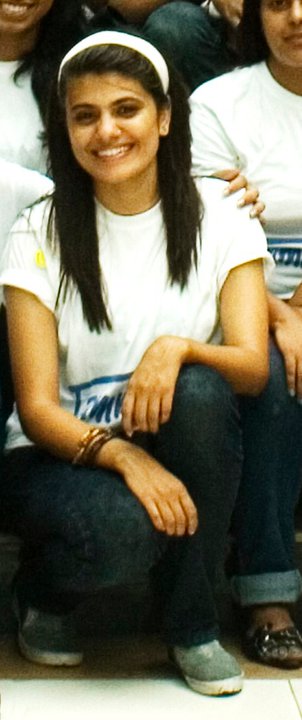
Isha Kakaria : Social Activist


Isha Kakaria, a business graduate, inspired by Mother Teresa is the founder of Chandigarh based NGO Tammana. Passion for social work drove her to start an NGO for the welfare of the society. Tammana not only helps the society but also provide many other people like her a platform to showcase their love and care towards the society.
 
Insipred by her critics Isha launched Tammana’s first social programme three years back on 1st September 2008, from where it has never looked back. TAMMANA does not charge any membership fees and is completely a voluntary NGO. Tammana once a one-man start is now 75+ members strong. TAMMANA looks forward to continue serving with the same pure intentions, consistency, same increasing enthusiastic team and the never give up attitude.

Isha adds, people usually think about serving, but one often stays back in lieu of shortage of time and resources. However, TAMMANA took the courage of bringing a change in the minds of many and had let them know that where lies a will, comes a way. 

Isha besides being the winner of women achiever award and social service award was also awarded commendation award for her selfless service on Independence Day by Shri.Shivraj Patil, Governor, Punjab.